USE CASES
One technology, multiple solutions to urban heat.
Photonic solutions applied to building construction, public works, urban spaces, the agri-food sector, and industrial infrastructure.
In building construction, photonic materials are used on facades, roofs, and structural elements. They reduce heat buildup and the energy demand associated with HVAC systems. The technology integrated into the material itself enables a reduction of up to 12 °C in urban temperatures during heat waves, which helps cool the urban environment and reduces the need to cool buildings without altering standard construction methods. Our technology drives the creation of more sustainable, efficient, and livable cities.
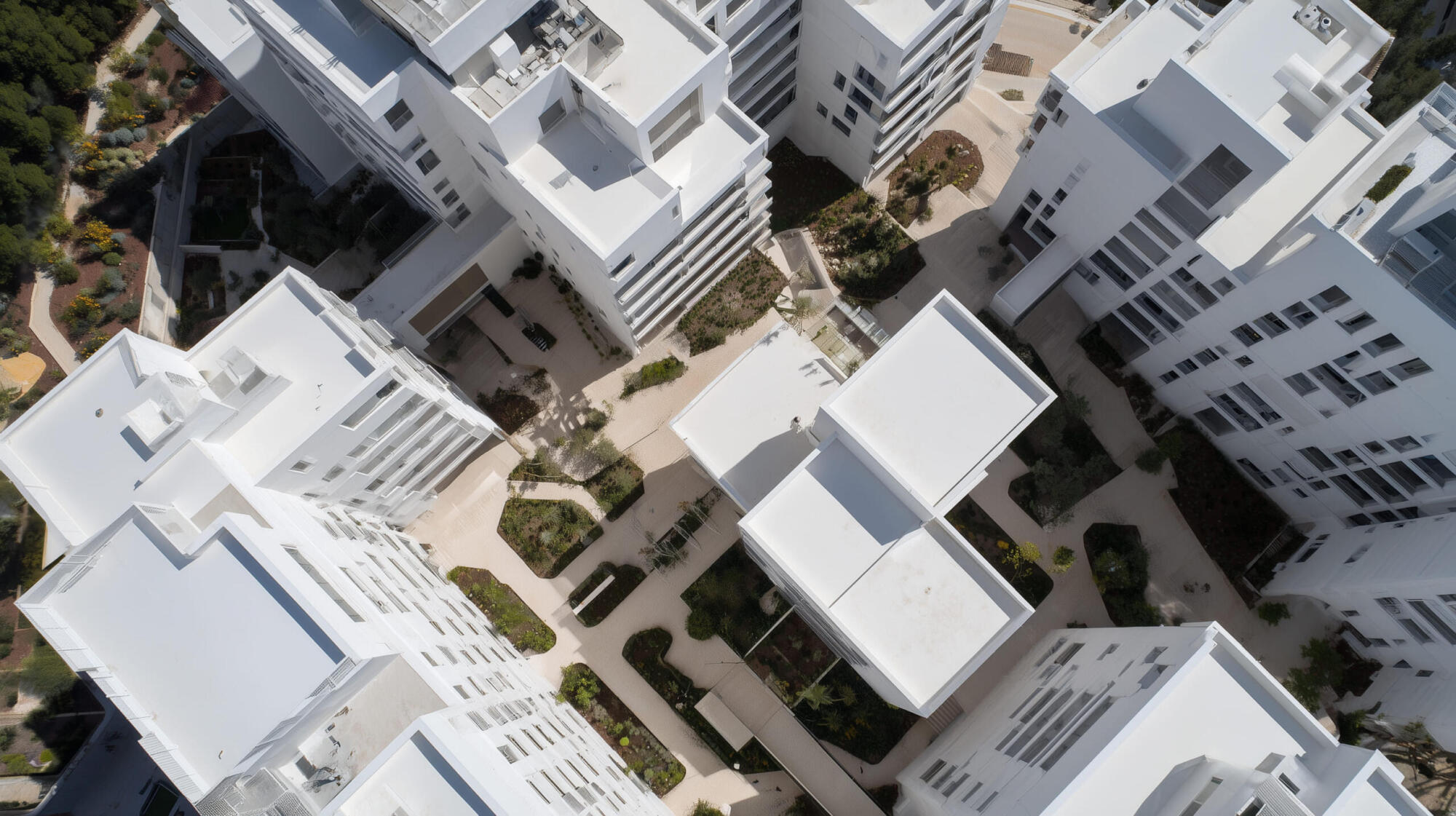
Construction
NEW CONSTRUCTION, SMART FACADES, AND ROOFS FOR ENERGY SAVINGS AND IMPROVED INDOOR COMFORT IN RESIDENCES, SPORTS FACILITIES, OFFICES, AND PUBLIC CENTERS.
Areas of application:
- New Construction: Residential (comfort and energy savings) and Sports Facilities (stadiums and high-performance centers).
- Renovation and Maintenance: Historic Buildings and Energy-Efficiency Renovations to improve passive thermal insulation.
Key benefits:
- Reduces urban temperatures by up to 12 °C during heat waves.
- Reduces energy consumption for cooling by up to 70%.
- Improves thermal comfort in buildings.
- Compatible with various building types and construction systems.
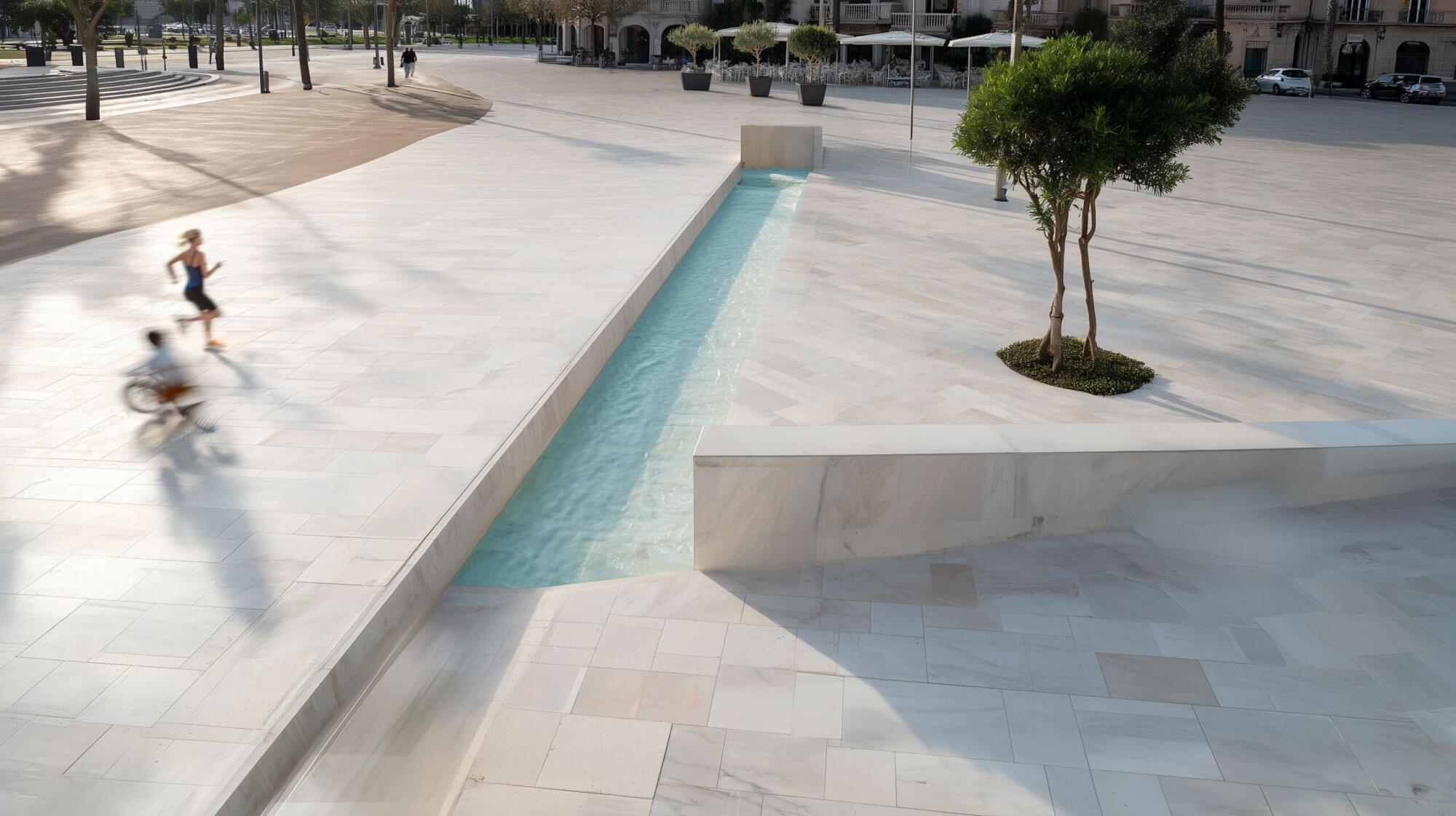
Public Works and Urban Planning
PAVING, SQUARES, AND INFRASTRUCTURE DESIGNED TO ELIMINATE THE HEAT ISLAND EFFECT IN DENSELY POPULATED CITIES.
Transforming spaces for the well-being of citizens. In public spaces, Photonic Technology minimizes heat buildup on streets, plazas, and paved areas. By drastically reducing surface temperatures, PhotoKrete mitigates the Urban Heat Island (UHI) effect, protects public health, and improves thermal conditions in the urban environment. This solution ensures safe daily use of the city, even during extreme heat events, and safeguards the well-being of people and built environments.
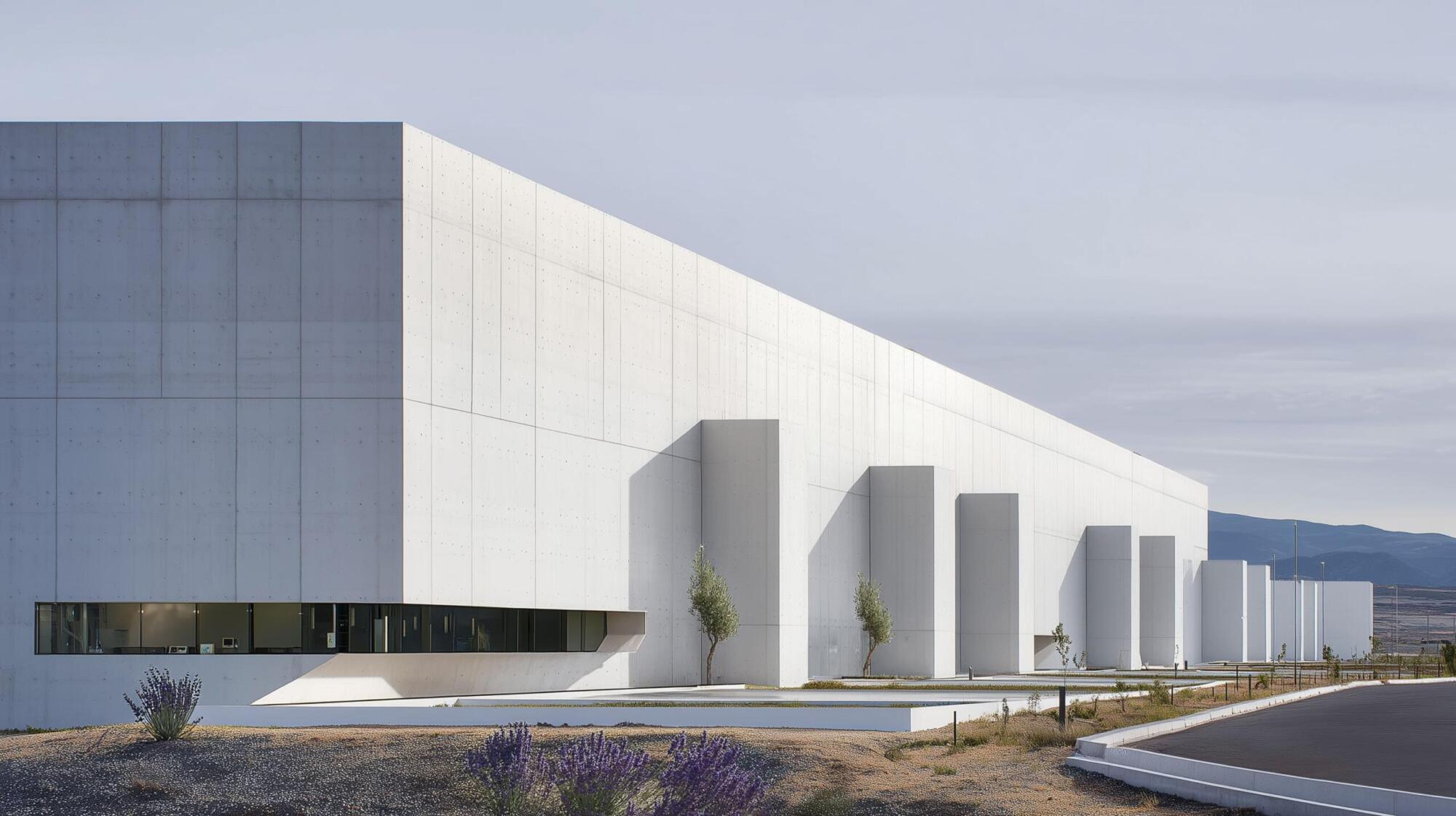
Industrial Infrastructure
PASSIVE THERMAL MITIGATION TO STABILIZE TEMPERATURES IN FACILITIES AND CRITICAL ASSETS EXPOSED TO HIGH LEVELS OF DIRECT AND AMBIENT SOLAR RADIATION.
In industrial environments and critical buildings, photonic materials reduce the thermal load on exposed surfaces. The temperature reduction can reach up to 12 °C during extreme heat events. This optimizes energy efficiency, ensures operational stability, and enhances the safety of industrial and technological facilities (industrial plants, data centers, and power plants).
Agri-food sector
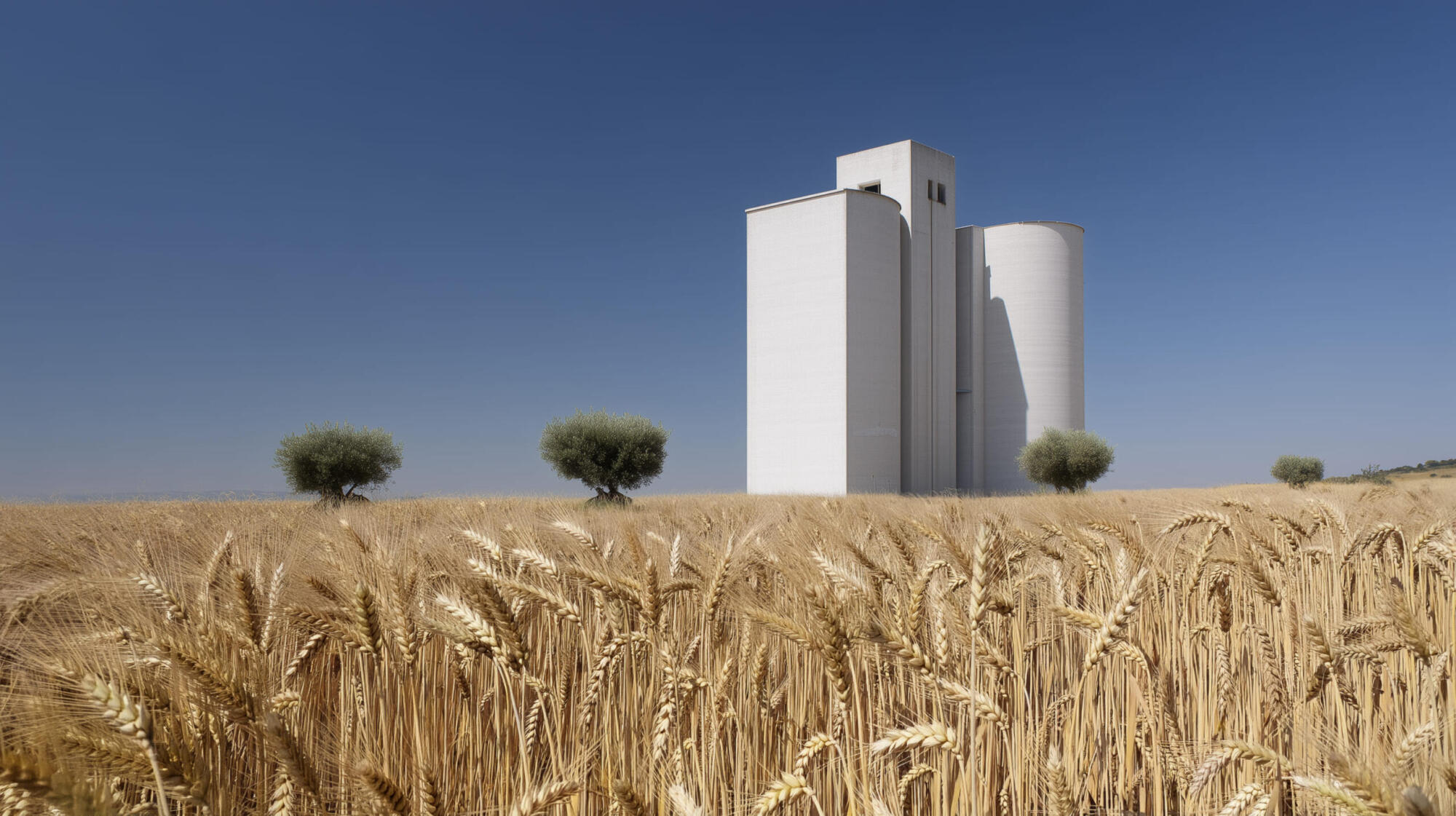
PASSIVE THERMAL MITIGATION TO PRESERVE STORAGE QUALITY AND IMPROVE ANIMAL WELFARE IN THE FACE OF HEAT STRESS.
In agricultural facilities and silos, PhotoKrete technology passively stabilizes the interior temperature. This solution ensures the integrity of stored products—eliminating heat-related losses—and optimizes animal welfare. It thus mitigates the impact of thermal stress on performance and prevents increased energy consumption from mechanical ventilation or cooling.
Logistics and Distribution
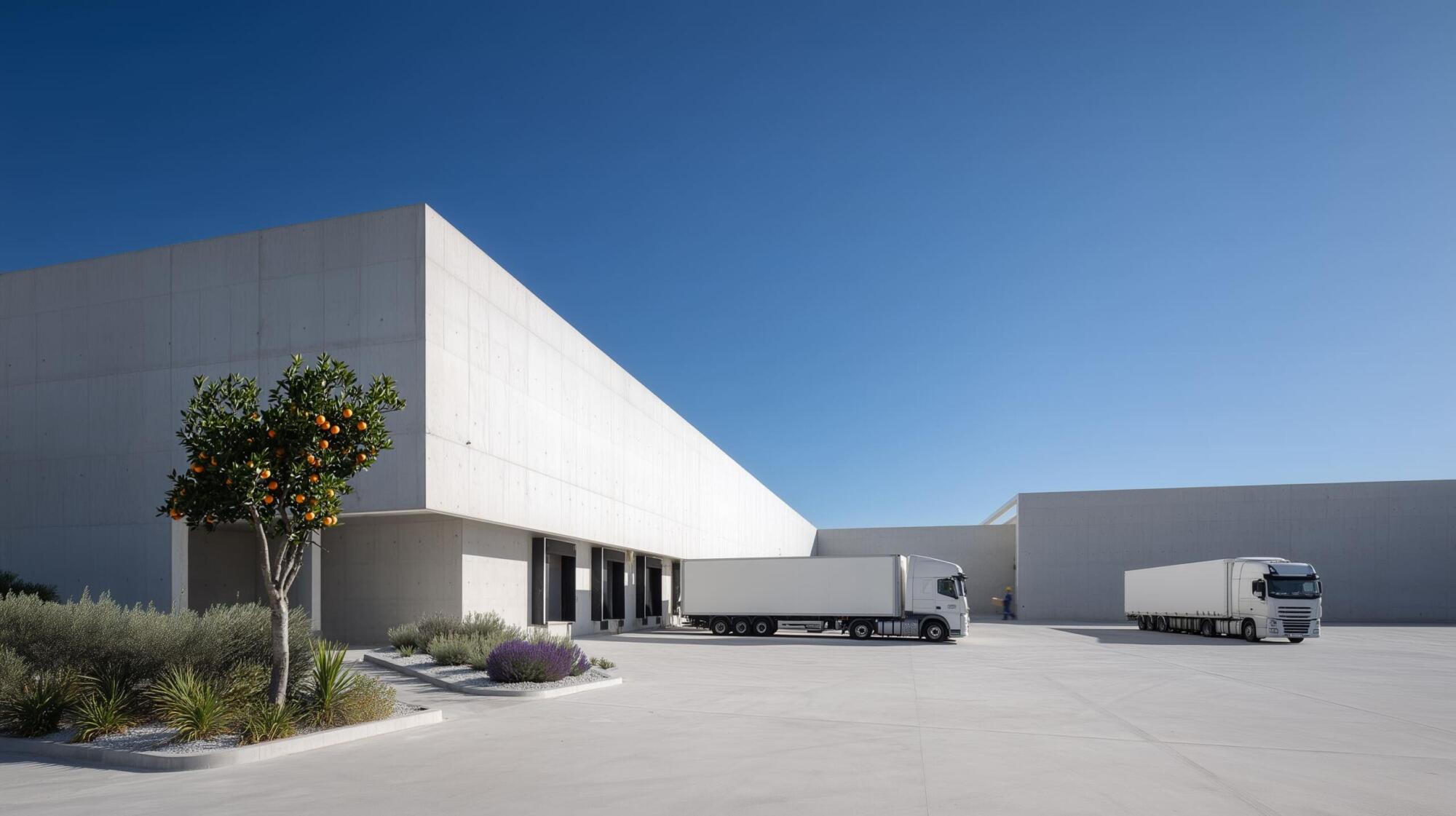
OPTIMIZATION OF WAREHOUSES AND LARGE STORAGE FACILITIES TO REDUCE COOLING DEMAND AND PROTECT THE CARGO.
Solutions designed for logistics hubs and large-scale warehouses. The use of photonic materials in roofs and facades enables passive thermal management that protects the integrity of goods and drastically reduces the operating costs associated with climate control in large spaces.

Projection and Impact
At PhotoKrete, we transform research into scalable solutions for the built environment, backed by validated data that supports decision-making in high-impact projects.
Demonstration Projects
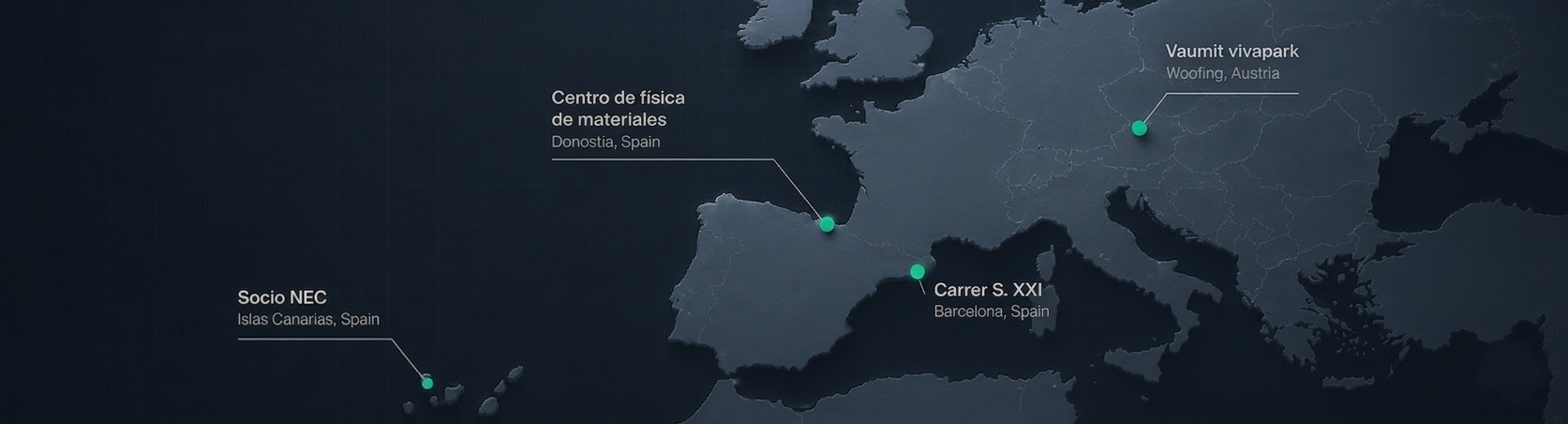
Real-world implementations of Photokrete’s photonic mortar technology in various European locations, aimed at validating its architectural integration and performance in urban environments.
- Baumit VivaPark – Wopfing, Austria: An experimental project at the Baumit VivaPark research facilities, dedicated to innovative materials and sustainable construction.
- Carrer S. XXI – Barcelona: An urban application developed in collaboration with Breinco-PK to integrate photonic mortars into public spaces.
- Center for Materials Physics – San Sebastián: Collaboration for the research and scientific validation of photonic materials and mortars.
- Canary Islands – NEC Partner: Demonstration project in the Canary Islands to evaluate the performance of photonic mortars in environments with high solar radiation.