PHOTONIC TECHNOLOGY
Smart materials with autonomous cooling capabilities.
Turns every surface into a climate solution.

Science with a Purpose
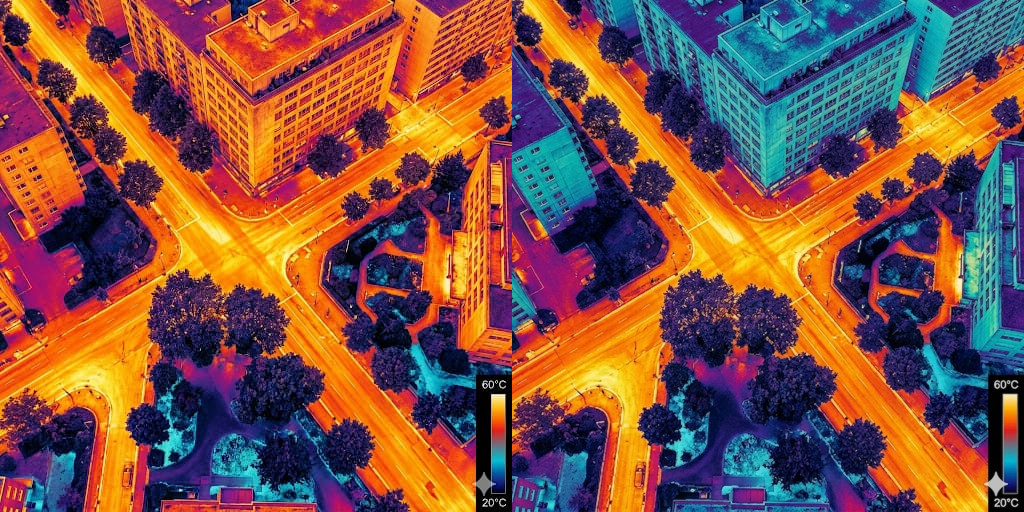
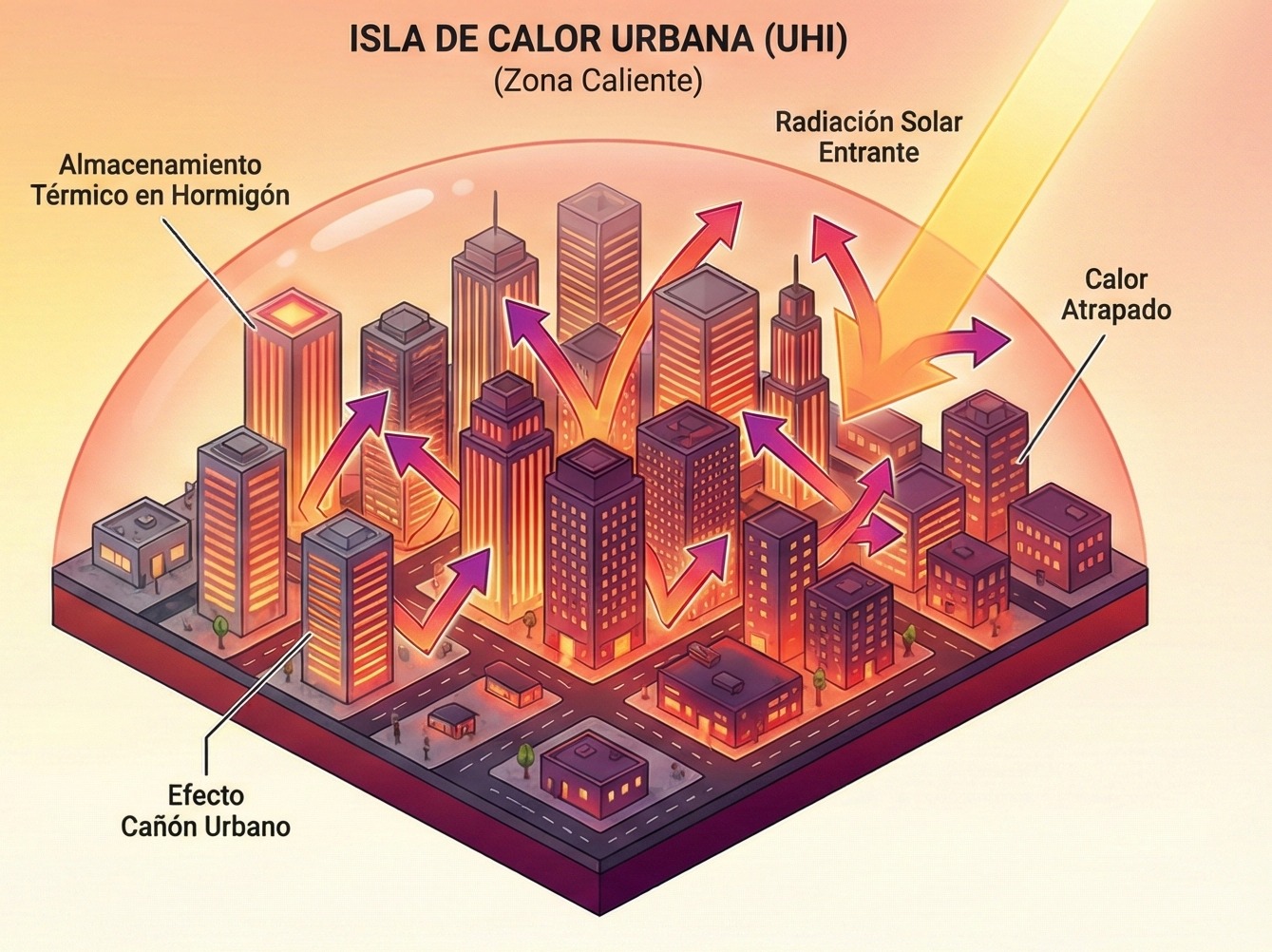
"Our photonic mortar actively combats the urban heat island effect. It doesn’t just protect the building; it cools the city."

The mechanism: passive radiative cooling
Passive radiative cooling toward the universal heat sink.
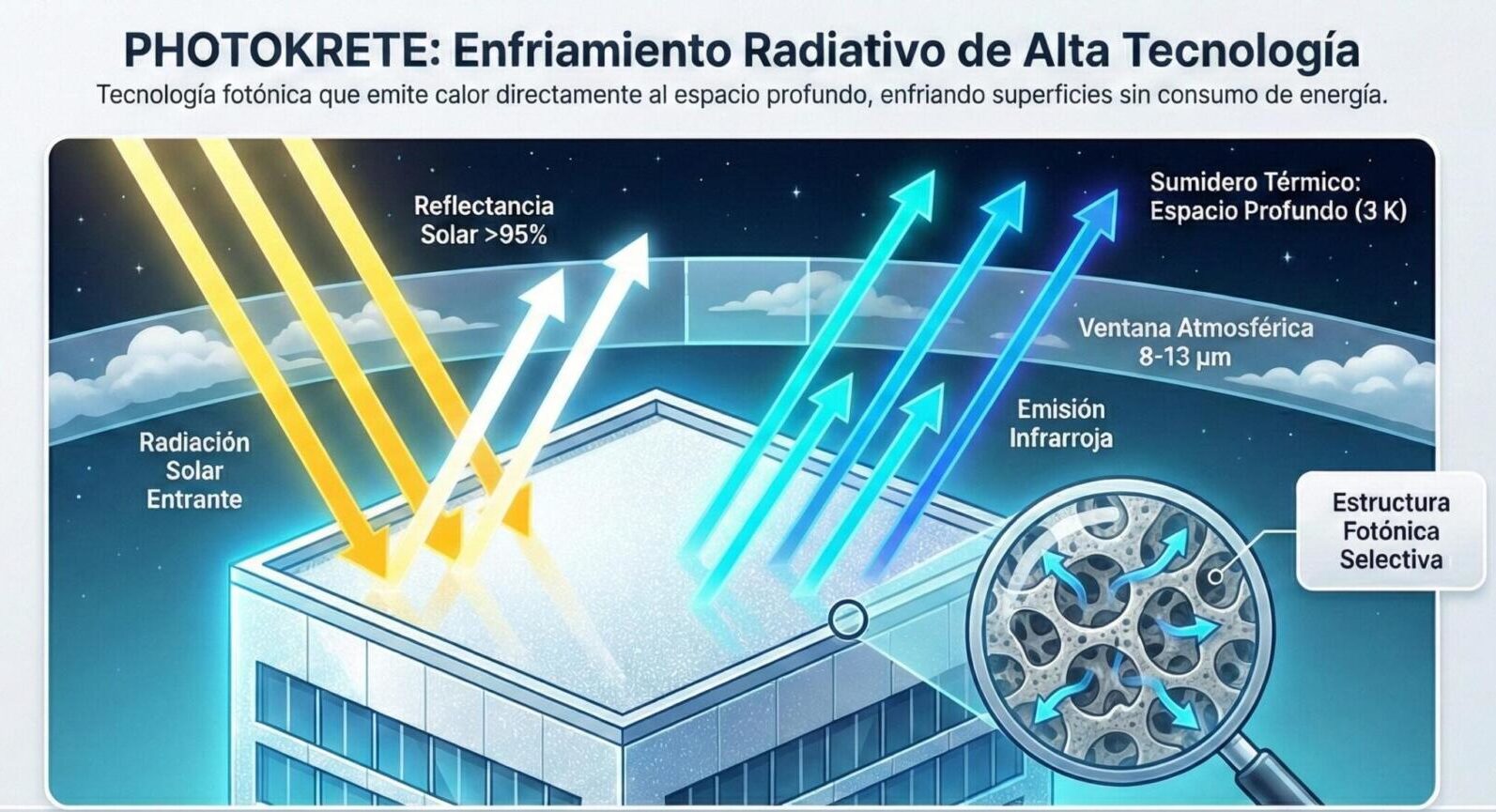
HEAT DISSIPATION THROUGH THE ATMOSPHERIC TRANSPARENCY WINDOW.
Passive radiative cooling is a physical phenomenon whereby a surface continuously releases heat by emitting thermal radiation toward the sky, even under direct solar radiation. By designing concrete with specific photonic properties, this process is enhanced: the material reflects most of the incoming solar energy and, at the same time, efficiently emits heat through a natural window in the atmosphere that allows it to dissipate into space.
Applying this principle to concrete—the most widely used material in buildings, roofs, and urban pavements—transforms traditionally hot surfaces into active cooling elements. Thus, cities can lower their temperatures, mitigate the heat island effect, and reduce energy demand for air conditioning in a passive, sustainable, and scalable manner.
Technical Advantages
Advanced engineering that redefines thermal performance.
- Active Photonic Management: Reflects 95% of solar radiation while simultaneously emitting heat, even under direct sunlight (Daytime Radiative Cooling).
- Heat Transfer to Space: Uses space as an infinite heat sink. This is a radically different solution from conventional insulation, which merely slows the passage of heat.
- Autonomy and Durability: A system with no moving parts, fluids, or electricity. It offers complete stability when exposed to severe UV radiation.
The Unique Value
Versatility and durability: an investment, not an ongoing maintenance cost.
Unlike short-term solutions such as paints or membranes, whose effectiveness decreases dramatically when exposed to sunlight, our photonic mortar offers exceptional UV durability. As an advanced cementitious material rather than a surface coating, its cooling capacity is intrinsic and permanent. Its versatility means that photonic technology is not limited to rooftops; the material can be integrated into building facades, city sidewalks, and critical infrastructure. It withstands the most demanding environmental conditions without losing thermal performance. PhotoKrete has developed the first mortar capable of autonomously cooling itself in response to solar radiation. This technology maintains a temperature lower than the ambient temperature and, depending on the time of day and weather conditions, achieves a reduction of up to 40 °C in the surface temperature of buildings and urban cooling of up to 12 °C during heat waves. It is the only comprehensive and scalable solution to mitigate the urban heat island effect, optimize energy savings, and combat climate change on a global scale.